Express Love-and Show It

“We can begin to become more diligent and concerned at home by telling the people we love that we love them. Such expressions do not need to be flowery or lengthy. We simply should sincerely and frequently express love.

Brethren and sisters, when was the last time you took your eternal companion in your arms and said, “I love you”? Parents, when was the last time you sincerely expressed love to your children? Children, when was the last time you told your parents that you love them?

Each of us already knows we should tell the people we love that we love them. But what we know is not always reflected in what we do. We may feel unsure, awkward, or even perhaps a bit embarrassed.

As disciples of the Savior, we are not merely striving to know more; rather, we need to consistently do more of what we know is right and become better.

We should remember that saying “I love you” is only a beginning. We need to say it, we need to mean it, and most importantly we need consistently to show it. We need to both express and demonstrate love.

President Thomas S. Monson recently counseled: “Often we assume that [the people around us] must know how much we love them. But we should never assume; we should let them know. … We will never regret the kind words spoken or the affection shown. Rather, our regrets will come if such things are omitted from our relationships with those who mean the most to us” (“Finding Joy in the Journey,” Liahona and Ensign, Nov. 2008, 86).

The relationship between love and appropriate action is demonstrated repeatedly in the scriptures and is highlighted by the Savior’s instruction to His Apostles: “If ye love me, keep my commandments” (John 14:15). Just as our love of and for the Lord is evidenced by walking ever in His ways (see Deuteronomy 19:9), so our love for spouse, parents, and children is reflected most powerfully in our thoughts, our words, and our deeds (see Mosiah 4:30).

Feeling the security and constancy of love from a spouse, a parent, or a child is a rich blessing. Such love nurtures and sustains faith in God. Such love is a source of strength and casts out fear (see 1 John 4:18). Such love is the desire of every human soul.

We can become more diligent and concerned at home as we express love—and consistently show it.

David A. Bednar, “More Diligent and Concerned at Home,” Ensign, Nov 2009, 17–20

Gospel Study in January 2010

Among other things, my gospel study in January included the following:2010 Outline for Sharing Time
January Theme (and weekly gospel principles): We believe in God the Eternal Father and in His Son, Jesus Christ.

January Scripture: “We believe in God, the Eternal Father and in His Son, Jesus Christ, and in the Holy Ghost” (Articles of Faith 1:1)
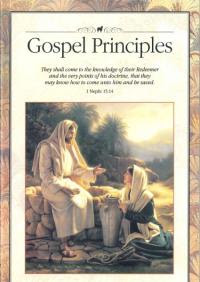
Ch. 1: Our Heavenly Father
Ch. 2: Our Heavenly Family

General Conference Addresses October 2009

This entire talk was excellent, and very applicable to my life and concerns as a parent. Rather than include the entire talk here, I’ll be posting segments of it over the next little while.

Dieter F. Uchtdorf, “The Love of God,” Ensign, Nov 2009, 21–24
This is the essence of what it means to be a true disciple: those who receive Christ Jesus walk with Him.

Because love is the great commandment, it ought to be at the center of all and everything we do in our own family, in our Church callings, and in our livelihood. Love is the healing balm that repairs rifts in personal and family relationships. It is the bond that unites families, communities, and nations. Love is the power that initiates friendship, tolerance, civility, and respect. It is the source that overcomes divisiveness and hate. Love is the fire that warms our lives with unparalleled joy and divine hope. Love should be our walk and our talk.

We increase our love for our Heavenly Father and demonstrate that love by aligning our thoughts and actions with God’s word. His pure love directs and encourages us to become more pure and holy. It inspires us to walk in righteousness—not out of fear or obligation but out of an earnest desire to become even more like Him because we love Him. By doing so, we can become “born again … [and] cleansed by blood, even the blood of [the] Only Begotten; that [we] might be sanctified from all sin, and enjoy the words of eternal life in this world, and eternal life in the world to come, even immortal glory.”

My dear brothers and sisters, don’t get discouraged if you stumble at times. Don’t feel downcast or despair if you don’t feel worthy to be a disciple of Christ at all times. The first step to walking in righteousness is simply to try. We must try to believe. Try to learn of God: read the scriptures; study the words of His latter-day prophets; choose to listen to the Father, and do the things He asks of us. Try and keep on trying until that which seems difficult becomes possible—and that which seems only possible becomes habit and a real part of you.

Love is the guiding light that illuminates the disciple’s path and fills our daily walk with life, meaning, and wonder.

Love is the measure of our faith, the inspiration for our obedience, and the true altitude of our discipleship.

Love is the way of the disciple.

Yoon Hwan Choi, “I Love Loud Boys,” Ensign, Nov 2009, 53–55

H. David Burton, “Let Virtue Garnish Your Thoughts,” Ensign, Nov 2009, 76–78
Virtuous traits form the foundation of a Christian life and are the outward manifestation of the inner man.

We need to stand tall and be firmly fixed in perpetuating Christlike virtues, even the “ity” virtues, in our everyday lives. Teaching virtuous traits begins in the home with parents who care and set the example. A good parental example encourages emulation; a poor example gives license to the children to disregard the parents’ teachings and even expand the poor example. A hypocritical example destroys credibility.

Now is the time for us to join in rescuing and preserving that which is “virtuous, lovely, or of good report or praiseworthy.” As we allow virtue to garnish our thoughts unceasingly and we cultivate virtuous traits in our personal lives, our communities and institutions will be improved, our children and families will be strengthened, and faith and integrity will bless individual lives.

Ann M. Dibb, “Hold On,” Ensign, Nov 2009, 79–81
It is important to note, however, that in the scriptures there are very few stories of individuals who lived in blissful happiness and experienced no opposition. We learn and grow by overcoming challenges with faith, persistence, and personal righteousness. I’ve been strengthened by President Thomas S. Monson’s endless confidence in our Heavenly Father and in us. He has said: “Remember that you are entitled to our [Heavenly] Father’s blessings in this work. He did not call you to your privileged post to walk alone, without guidance, trusting to luck. On the contrary, He knows your skill, He realizes your devotion, and He will convert your supposed inadequacies to recognized strengths. He has promised: ‘I will go before your face. I will be on your right hand and on your left, and my Spirit shall be in your hearts, and mine angels round about you, to bear you up’” (“Sugar Beets and the Worth of a Soul,” Liahona, July 2009, 3–4; Ensign, July 2009, 5–6).

Heavenly Father has not left us alone during our mortal probation. He has already given us all the “safety equipment” we will need to successfully return to Him. He has given us personal prayer, the scriptures, living prophets, and the Holy Ghost to guide us. At times, using this equipment may seem cumbersome, awkward, and horribly unfashionable. Its proper use requires our diligence, obedience, and persistence. But I, for one, choose to use it. We must all choose to use it.

D. Todd Christofferson, “Moral Discipline,” Ensign, Nov 2009, 105–8

Moral discipline is the consistent exercise of agency to choose the right because it is right, even when it is hard. It rejects the self-absorbed life in favor of developing character worthy of respect and true greatness through Christlike service (see Mark 10:42–45). The root of the word discipline is shared by the word disciple, suggesting to the mind the fact that conformity to the example and teachings of Jesus Christ is the ideal discipline that, coupled with His grace, forms a virtuous and morally excellent person.

(excellent helps for parents in teaching moral discipline to children)
The Ensign, January 2010

The Friend, January 2010

Safeguard your family with scripture study

“The third basic is family and personal scripture study. This requires some planning and discipline on the part of the parents and all of the children. We must help our children by strengthening their faith and understanding.

One young lady, recently married in the temple, spoke of the value of scripture study in her family when she was growing up. Her mother used to ring a large cowbell at 5:00 a.m. daily to awaken the family for scripture study. She felt grumpy and thought that this daily exercise was a waste of time, but, nonetheless, the routine continued from her childhood into adult life. As she looks back, this young woman now realizes that this time of family scripture study formed an important pattern which she and her brothers and sisters continue to follow in their own families. During these study times, she slowly but surely gained a testimony of the gospel. During these formative years, she also formed a special eternal bond with her parents and with each of her brothers and sisters.

Personal and family scripture study is a lifetime process. Children may struggle a little with some of the language of the scriptures, and so parents and older siblings should take time to discuss and explain some of the more difficult passages. They should explain their relevance to some of their current circumstances. Gospel study habits may take years to establish firmly in families—they do not just happen. Study habits help form a protective wall for families to rely on and help them bond together.

James E. Faust, “Challenges Facing the Family,” Worldwide Leadership Training Meeting, Jan. 10, 2004, 2–3.

Safeguard your family with weekly family home evening.

“The second safeguard is weekly family home evening. Family home evening is for all of us no matter what stage of life we are in. Sister Faust and I find that family home evening is different for us than it used to be with our children and grandchildren around us. Most of the time now we study the scriptures together. A few weeks ago in our family home evening, we read our patriarchal blessings, trying to understand what work we might yet have to accomplish. We found we still have additional work to do.

Some families have moved away from this important meeting. We should do all we can to free up Monday evenings from any other competing activities. Like glue, family home evening bonds us together as families. Lessons should be instructive and involve family members in a relaxed atmosphere which includes an expression of love.

In our family home evenings we should try to involve everyone, except infants, in some way. Small children can participate by singing songs. Older children can be assigned
to prepare and teach all or part of the lesson. Other family members can help the younger children prepare. All should be invited to ask questions arising from their own gospel study or from the lesson.

Family home evening is also a time for calendaring family activities so that everyone knows what is expected of them. It is a time when misunderstandings can be ironed out.
It is also a time to encourage family members to enhance their talents and seek new skills.”

James E. Faust, “Challenges Facing the Family,” Worldwide Leadership Training Meeting, Jan. 10, 2004, 2–3.

Safeguard your family with family prayer.

“We cannot build walls of brick and stone around our families, but we must constantly put safeguards around them to protect them. These safeguards will be a protection. May
I mention three ways to protect and strengthen our families.

Family Prayer
One of these is family prayer. The Spirit of the Lord is invited into the home through prayer and harmony in the home. Parents need to teach their children that they are children
of God and that they should pray to Him daily. Praying together as a family is a bonding experience. Younger children can learn how to pray as they hear the prayers of their parents
and older siblings.

My own heart and mind were captured as a young boy by my grandfather’s prayers. His large family knelt morning and night before meals. At the time, I thought his prayers were
far too long! He had much to pray about. He was a farmer and rancher. It was during the Great Depression, and there was a terrible drought in the land. His animals were starving.
He had many mouths to feed. But his prayers were so fervent and his faith so great, I was convinced that the Lord would provide and that all would be well. It ultimately proved
to be so. Individual prayer and family prayer are indispensable to personal and family happiness.”

James E. Faust, “Challenges Facing the Family,” Worldwide Leadership Training Meeting,
Jan. 10, 2004, 2–3.

Motherhood is an honored and sacred trust.

“No matter what you read or hear, no matter what the differences of circumstances you observe in the lives of women about you, it is important for you Latter-day Saint women to understand that the Lord holds motherhood and mothers sacred and in the highest esteem. He has entrusted to his daughters the great responsibility of bearing and nurturing children.

“This is the great, irreplaceable work of women. Life cannot go on if women cease to bear children. Mortal life is a privilege and a necessary step in eternal progression. Mother Eve understood that. You must also understand it.

“It was never easy to bear and rear children, but easy things do not make for growth and development…

Much is said about the drudgery and the confinement of the woman’s role in the home. In the perspective of the gospel it is not so. There is divinity in each new life. There is challenge in creating the environment in which a child can grow and develop. There is partnership between the man and woman in building a family which can last throughout the eternities.

Mothers have a sacred role. They are partners with God, as well as with their own husbands, first in giving birth to the Lord’s spirit children and then in rearing those children so they will serve the Lord and keep his commandments. Could there be a more sacred trust than to be a trustee for honorable, well-born, well-developed children?”

Spencer W. Kimball, “Privileges and Responsibilities of Sisters,” Ensign, Nov 1978, 101

Scripture of the Week

“Scripture study as individuals and as a family is most fundamental to learning the gospel. Daily reading of the scriptures and discussing them together is a powerful tool against the temptations of Satan. This practice will produce great happiness and will help family members love the Lord and his goodness. Home is where we become experts and scholars in gospel righteousness.”
(President Spencer W. Kimball, The Teachings of Spencer W. Kimball, p. 129)

Prophets through all of the ages have taught the importance of studying the scriptures, both individually and as a family. But what the prophets haven’t said is specifically how that should be done. From all of my research no prophet has ever commanded “Thou shalt read 42 verses a day in your family”. And nobody has ever said “Thou shalt read 5 verses per family member every morning and night”.

The nice thing about family scripture study is that it can be tailored to meet the needs of each family. So today I am sharing something that is working well for our family, in case it might help you. But feel free to tailor my system to find something that meets the needs of your family!

A year ago I was pondering about ways that I could improve both the quality of our family scripture study and our Family Home Evenings. I decided that I could start by making sure to focus on the scriptures each week during Family Home Evening. Here is how it works for us:

1) Plan a family home evening lesson.
2) Chose a scripture that corresponds with the lesson.
3) Read and discuss the scripture as a family at FHE.
4) Make a poster to display the scripture. This is really simple. I just type it up large to fill a 8.5 by 11 sheet of paper and then I tape it up on the wall near our kitchen table.
5) Refer to the scripture and talk about it throughout the week.
It’s a pretty simple thing, but it has made a difference in our family. We usually end up discussing it during mealtimes, and it allows me to review the key concepts from the lesson. We don’t spent a lot of time on it (and we aren’t required to memorize it), it just gives us a reminder or a starter for a gospel discussion with the children each day.

Focusing on one verse a week is a nice, manageable amount for my young children (ages 5 and 2). A number of times the Ant Bug has surprised me by memorizing the scripture, and in all cases she ends up reading the scripture on her own at some point–a bonus for encouraging literacy skills in early readers!

Here two other posts that I liked that share good ideas for daily family reading:
Mormon Women: A family scripture treasure chest
A Peaceable Walk: Daily scripture cards

I have previously been posting our scripture of the week on Nurture Mama’s Reading List, along with notes about our Family Home Evening lesson. The good news is now it will all be here! So now you can check in each Tuesday to see what we did for Family Home Evening, as well as our scripture of the week.

I would love to hear how family scripture study works at your home! Feel free to share your stories in the comments.

“Everything in the scriptures is applicable to our lives. The scriptures answer our questions, they provide role models and heroes, and they help us understand how to handle challenges and trials. Many times the scriptures you read will be the answer to your prayers.”
Elaine S. Dalton, “Believe!,” Ensign, May 2004, 110

Heavenly guidance

“God’s love is so perfect that He lovingly requires us to obey His commandments because He knows that only through obedience to His laws can we become perfect, as He is. For this reason, God’s anger and His wrath are not a contradiction of His love but an evidence of His love. Every parent knows that you can love a child totally and completely while still being creatively angry and disappointed at that child’s self-defeating behavior.

Where do parents draw the line? That is a matter for parental wisdom, guided by the inspiration of the Lord. There is no area of parental action that is more needful of heavenly guidance or more likely to receive it than the decisions of parents in raising their children and governing their families. This is the work of eternity.”

Dallin H. Oaks, “Love and Law,” Ensign, Nov 2009, 26–29

Your vital role

“Sisters, I wish I could place my hands on both sides of your faces, look deeply into your eyes, and impart to you a clear vision of your vital role as beloved daughters of God whose “lives have meaning, purpose, and direction.” We are women who “increase our testimonies of Jesus Christ through prayer and scripture study,” who “seek spiritual strength by following the promptings of the Holy Ghost.” We “dedicate ourselves to strengthening marriages, families, and homes” and “find nobility in motherhood and joy in womanhood.”

Mary Ellen W. Smoot, “Steadfast and Immovable,” Ensign, Nov 2001, 91

Show your love today

In the family proclamation we also learn that “by divine design, fathers are to preside over their families in love and righteousness and are responsible to provide the necessities of life and protection for their families. Mothers are primarily responsible for the nurture of their children. In these sacred responsibilities, fathers and mothers are obligated to help one another as equal partners.”

It is in the home that the family learns and applies gospel principles. Great love is necessary in order to teach and guide a family. Loving fathers and mothers will teach their children to worship God in their home. When a worshiping spirit permeates the home, that spirit is extended into the life of each family member. This will prepare them to make whatever sacrifice is necessary to be able to return to God’s presence and stay together as a family for all eternity.

The family proclamation helps us understand much of the love the Savior referred to when He told us we must “love one another.” He gave us the supreme example of love when He declared, “Greater love hath no man than this, that a man lay down his life for his friends.” He later atoned for all our sins and finally gave His life for all of us.

We can lay down our lives for those we love not by physically dying for them but rather by living for them—giving of our time; always being present in their lives; serving them; being courteous, affectionate, and showing true love for those of our family and to all men—as the Savior taught.

We don’t know what could happen to us tomorrow, and that is why today is the time to start showing your love through small acts such as a hug and an “I love you” to your spouse and children and those around you.

Claudio R. M. Costa, “Don’t Leave for Tomorrow What You Can Do Today,” Ensign, Nov 2007, 73–75