Scripture of the Week: And he took them up in his arms, put his hands upon them, and blessed them. Mark 10:16
…and he took their little children, one by one, and blessed them, and prayed unto the Father for them. 3 Nephi 17:21
This lesson was adapted from Lesson 28 in the Family Home Evening Resource Book. We will be blessing our new baby boy soon, so this lesson was designed to teach our children about the sacred ordinance.
Lesson Plan Discuss with your family the meaning of their names, and why they were given that name.
Explain that the ordinance of giving a name and a blessing is a sacred and happy experience for the family.Explain that Jesus Christ blessed the children one by one (see Mark 10:16 and 3 Nephi 1721). Show a picture of Jesus blessing the children. When Jesus blessed the children, he did it with authority from our Heavenly Father. We have the same authority in the Church today, the Melchizedek Priesthood.
The Ant Bug
Talk about each child’s blessing. Show pictures and share the notes from the blessing.
The Sweet Bee
Show the children the certificates of blessing for themselves and the parents. The certificate is an official church record that shows that the baby is now on the official membership records of the Church.
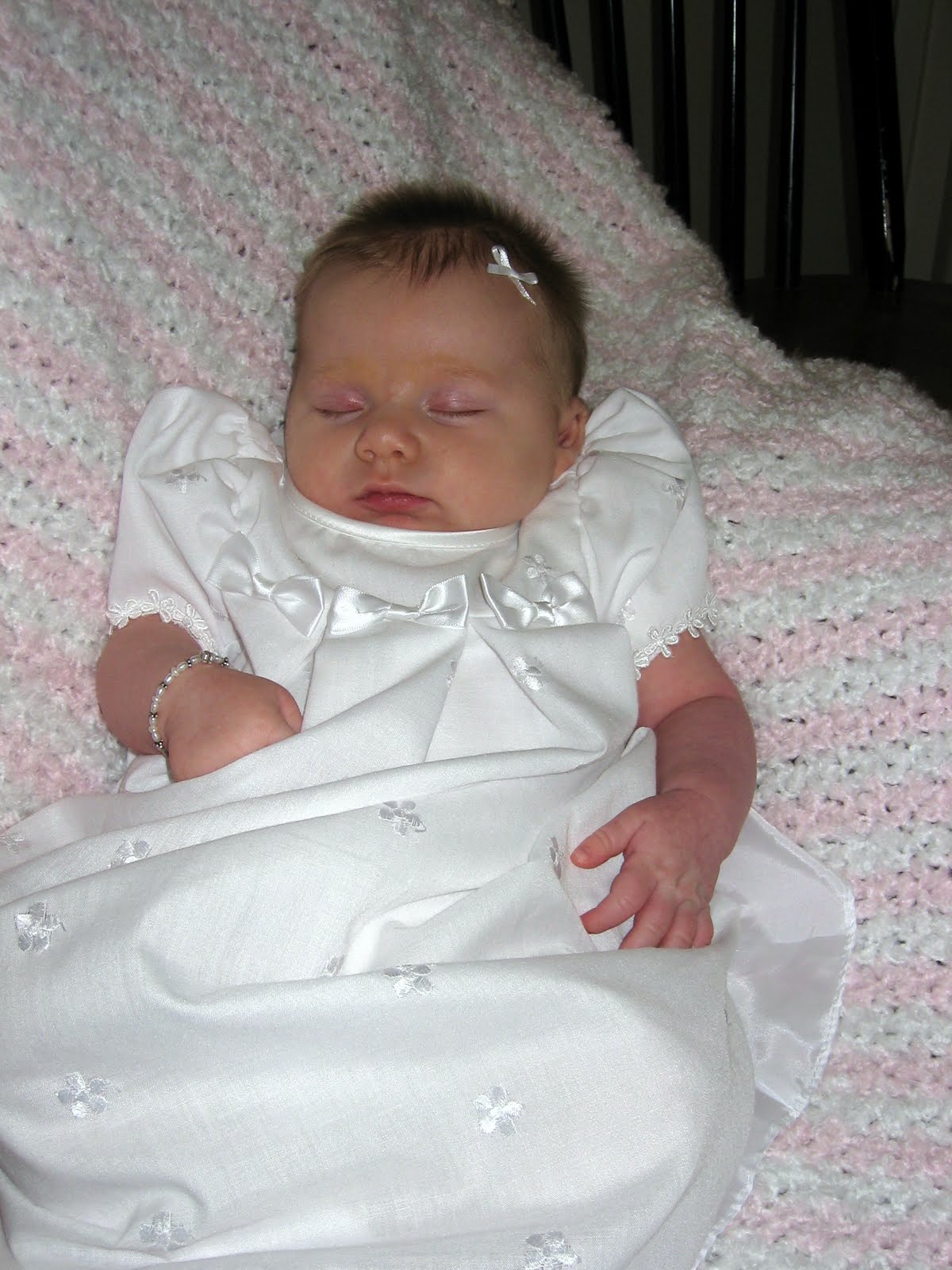
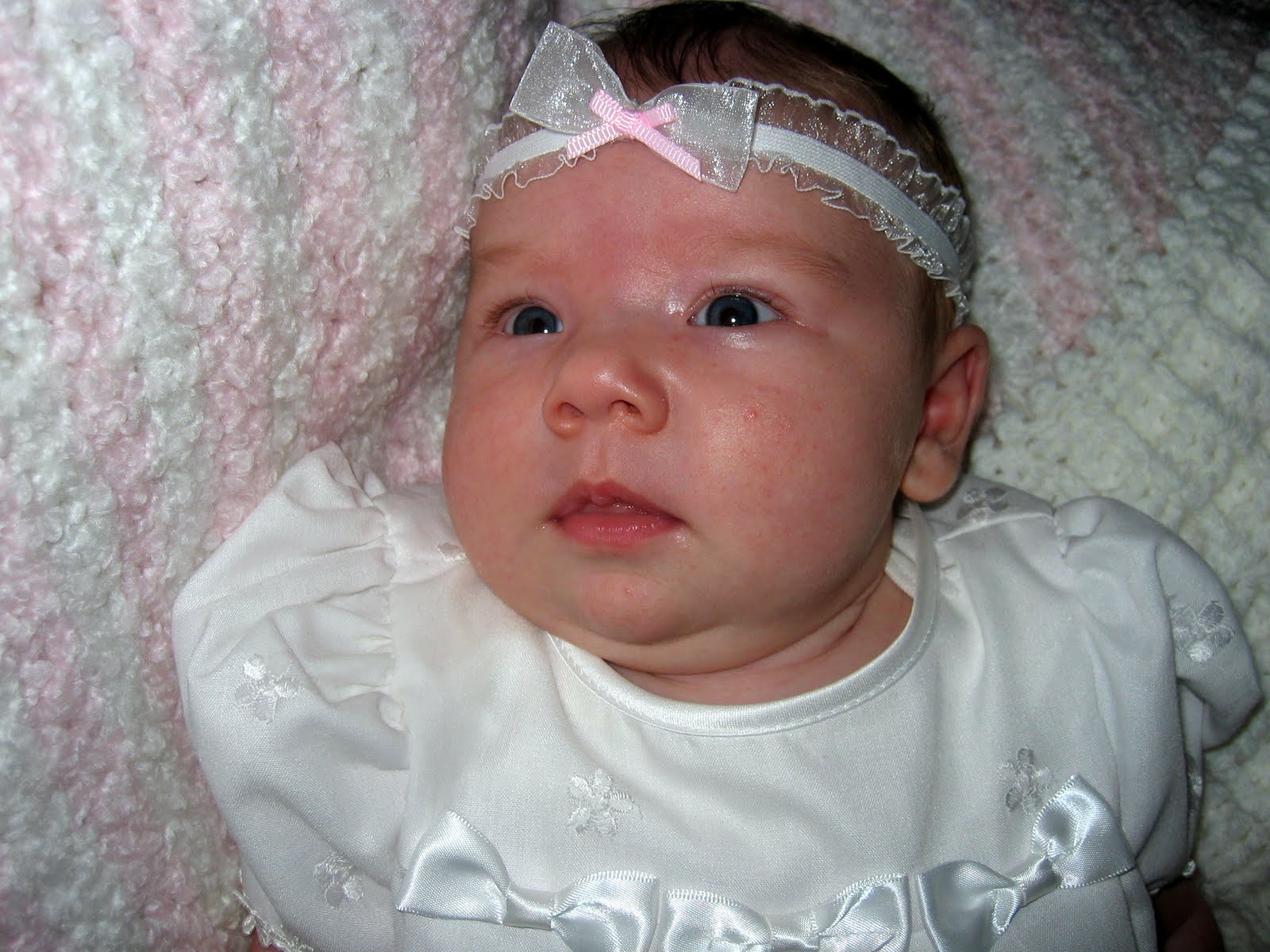
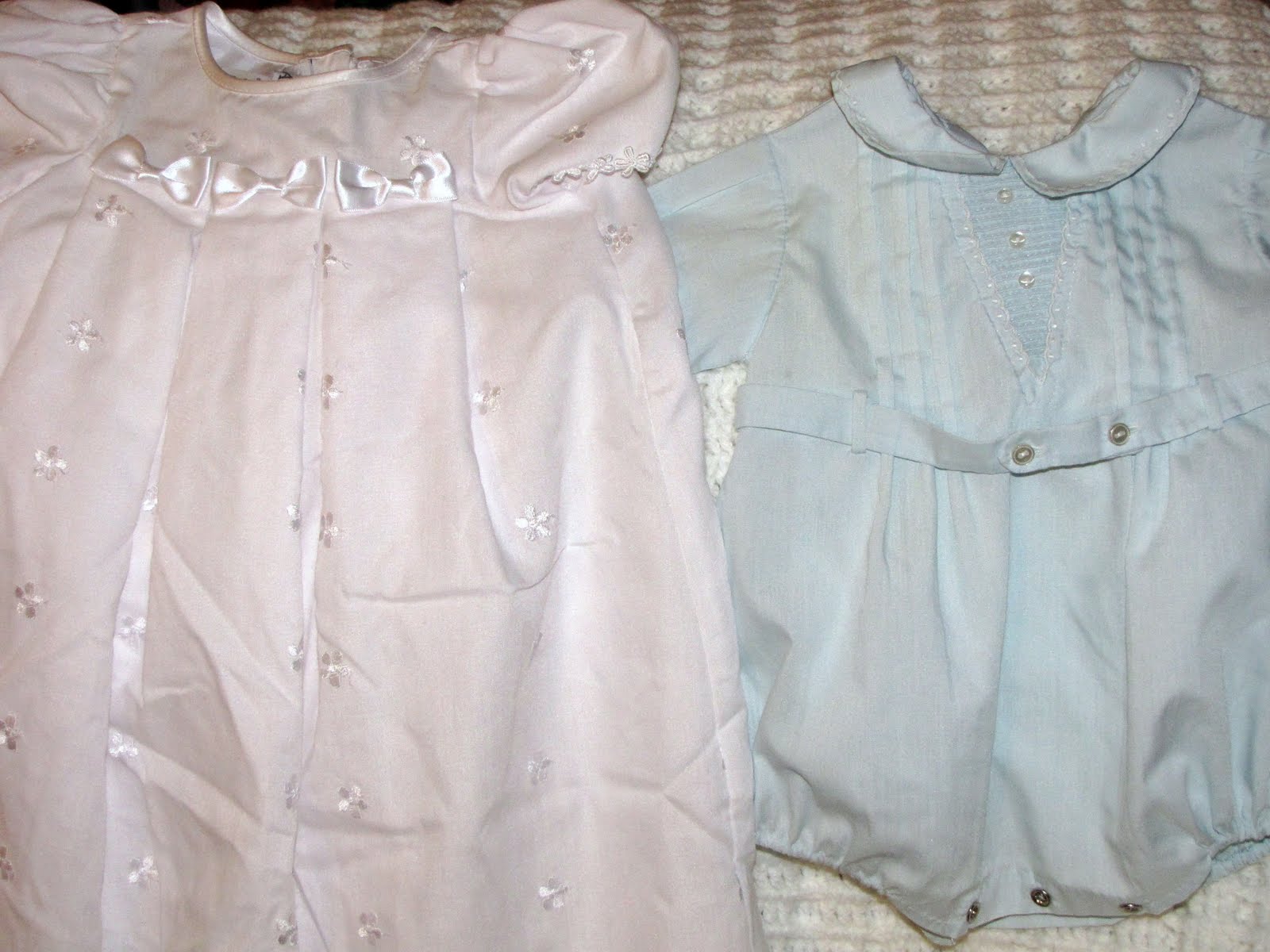
Discuss plans for the baby blessing. Show what the baby will be wearing.
The white dress was worn by both of my daughters for their blessing. The blue outfit will be worn by our son. It was worn by their father for his blessing.
Conclude by discussing our gratitude for each baby that has been born to our family.
When it comes time for family prayer and scripture study in our home, I would have to say that the mood is generally far from reverent. The same applies during Sacrament Meeting, so my husband and I realized that lessons on reverence would be a good thing. Here are two Family Home Evening lessons on reverence that we did recently:
I Will be Reverent, from Behold Your Little Ones Nursery Manual (lesson 20). We mostly just followed the lesson plan as written. We also discussed what our body should be doing when we are reverent: arms folded, mouths closed, ears open, bodies still, eyes closed and head bowed (during a prayer). It worked well to practice being reverent, for example, “Let’s pretend it’s time for family prayer. What should we do with our arms? Should our eyes be open or closed?” etc. We emphasized that being reverent means quietly thinking about Heavenly Father and Jesus Christ.
I thought that the teaching tip on the sidebar of p. 85 was helpful: “Do not reward reverent behavior with prizes or food. Do not have contests to see who can be the most reverent. These tend to focus on the wrong things. Teach about the real rewards of reverence, such as increased understanding and the influence of the Spirit. Give the children specific verbal praise when they show reverence, for example: “I like the way Mary is sitting so reverently. Thank you, Mary.”
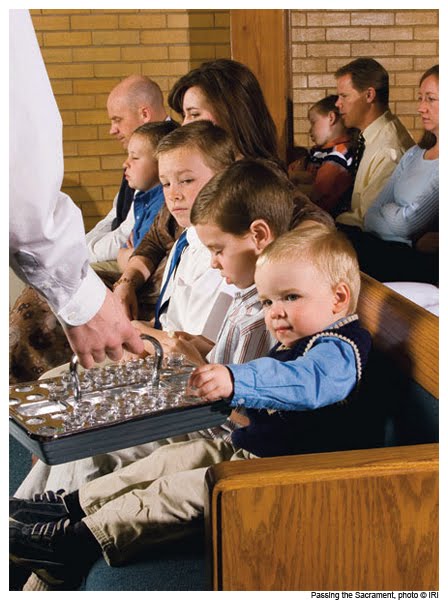
Review what our body parts are doing when we are being reverent, and that being reverent means thinking about Heavenly Father and Jesus Christ. Discuss the sacrament: Each Sunday we have a special opportunity to remember Jesus, to take the bread and water, etc. Show the picture on p. 114 and point out the details, emphasizing the reverent behaviors. Role play taking the sacrament and being reverent. Ask “Who should we think about when we take the sacrament?”
Scripture of the Week If any of you lack wisdom, let him ask of God, that giveth to all men liberally, and upbraideth not; and it shall be given him. James 1:5
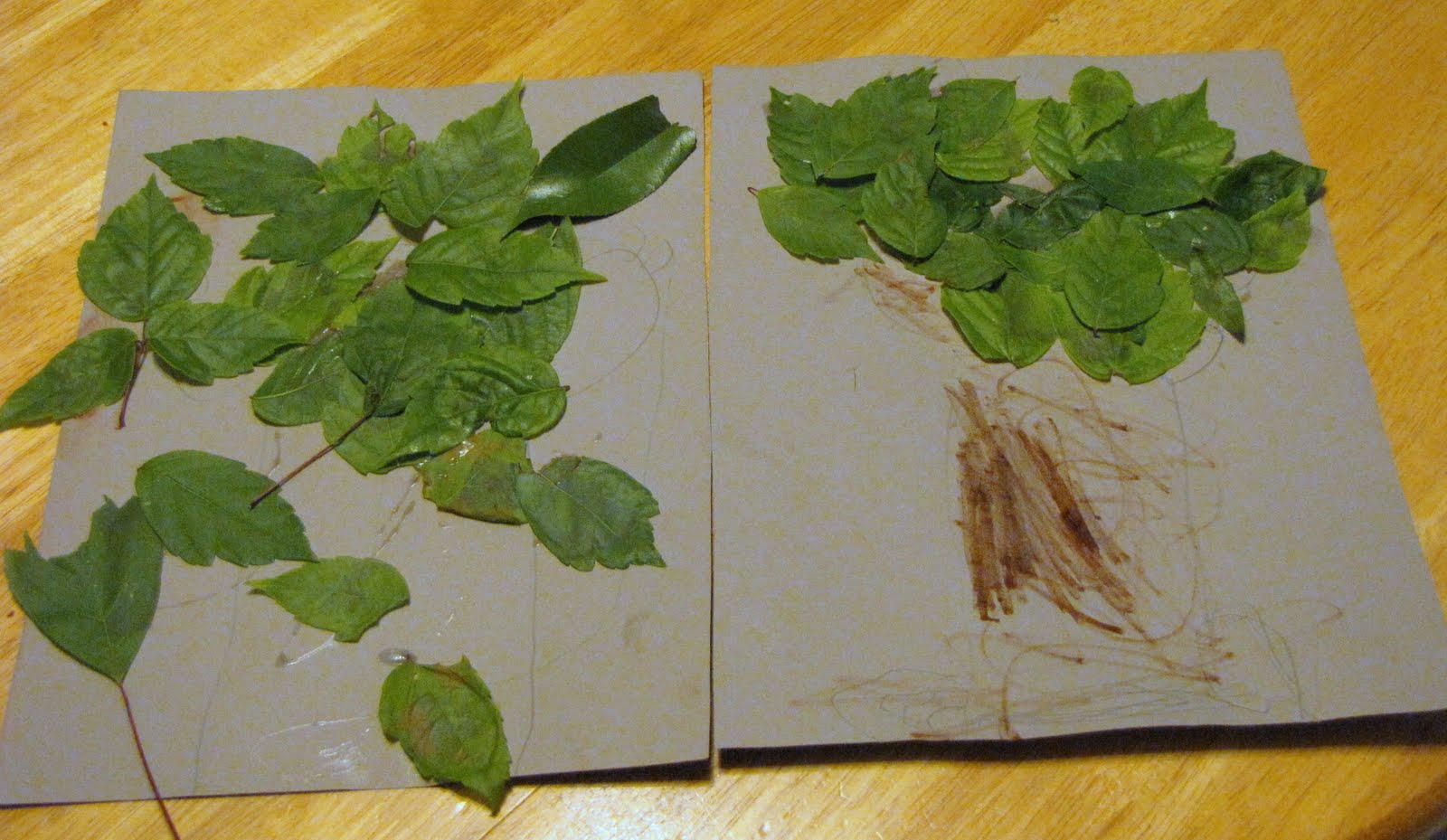
Lesson Plan The Ant Bug brought home the CTR Tag-Along Bag from Primary on Sunday, so she selected Lesson 13 from this packet on Sugardoodle.netto teach. She read the story of Joseph Smith going into the grove to pray, and she asked the appropriate questions. For a great hands-on activity we glued leaves to brown paper to make our own sacred grove.
Scripture of the Week “Be strong and of a good courage, fear not, nor be afraid of them: for the Lord thy God, he it is that doth go with thee; he will not fail thee, nor forsake thee.” Deut. 31:6
Lesson Plan Discuss the word courage and what it means. Share the stories of Abinidi before King Noah and Daniel in the lion’s den (use GAK photos) and discuss how these men showed great courage and faith in the face of a serious trial.
Scripture of the Week “The Lord is my rock, and my fortress, and my deliverer; my God, my strength, in whom I will trust; . . . I will call upon the Lord . . . so [I shall] be saved from mine enemies.” Psalms 18:2-3 (We chose this scripture because it was quoted by President Monson in his closing remarks during General Conference, April 2010)
Lesson Plan Fill 9 plastic Easter eggs each with one of the following items and scripture reference. Hide the eggs for the children to find. Open the eggs in order, read the scripture and discuss the item, then match to the appropriate Gospel Art Kit (GAK) picture. Simplified explanations of the events are included with each statement below.
Watch the following Mormon Message (An Apostle’s Easter Thoughts on Christ) by Elder Jeffrey R. Holland
1. a leaf–real or plastic (if it vaguely resembles a palm branch, all the better) “And many spread their garments in the way: and others cut down branches off the trees, and strawed them in the way. And they that went before, and they that followed, cried, saying, Hosanna; Blessed is he that cometh in the name of the Lord” (Mark 11:8-9). (When Jesus entered Jerusalem, the people waved branches because that’s what people used to do when a king walked by.) GAK: 223
2. a piece of a tortilla, pita, or bread or white clay shaped to look like flat bread “And as they did eat, Jesus took bread, and blessed, and brake it, and gave to them, and said, Take, eat: this is my body” (Mark 14:22). (The next day, Jesus had another special meal with his friends. We call this The Last Supper. This is when the sacrament began, because Jesus said that people who followed Him should have bread and wine or water to help them remember Him.) GAK: 225
3. a picture of Jesus in the Garden “For behold, I, God, have suffered these things for all, that they might not suffer if they would repent; but if they would not repent they must suffer even as I; which suffering caused myself, even God, the greatest of all, to tremble because of pain, and to bleed at every pore, and to suffer both body and spirit”and would that I might not drink the bitter cup, and shrink”nevertheless, glory be to the Father, and I partook and finished my preparations unto the children of men”(D & C 19:16-19). ( Jesus went to a garden to pray. Here, he suffered for our sins. Because He did this for us, we can repent and live in heaven again.) GAK: 227
4. three dimes “And Judas Iscariot, one of the twelve, went unto the chief priests, to betray him unto them. And when they heard it, they were glad, and promised to give him money. And he sought how he might conveniently betray him” (Mark 14:10-11). (Judas was supposed to be one of Jesus special helpers, but instead he helped other men arrest Jesus. He did this because those men paid him money.) GAK: 228
5. a cross made out of wood, toothpicks, popsicle sticks, paper, or brown clay “And it was the third hour, and they crucified him” (Mark 15:25). (Jesus was crucified.) GAK: 230
6. a nail “Behold the wounds which pierced my side, and also the prints of the nails in my hands and feet; be faithful, keep my commandments, and ye shall inherit the kingdom of heaven. Amen” (D & C 6:37). (When the soldiers put Jesus on the cross, they pounded nails into His hands and feet.)
7. a little bundle (wrapped in fabric, a baggie, plastic wrap, etc.) of spices–cloves would be nice “And when the sabbath was past, Mary Magdalene, and Mary the mother of James, and Salome, had bought sweet spices, that they might come and anoint him” (Mark 16:1). (After Jesus died, His friends put his body in a tomb. Later, some of the women who followed Him came to the tomb to put spices on His body. That was something they did back then when someone died.) GAK: 231
8. a stone–rounded would be best “And they said among themselves, Who shall roll us away the stone from the door of the sepulchre? And when they looked, they saw that the stone was rolled away: for it was very great” (Mark 16:3-4). (The tomb had a rock that could roll over the opening to seal it. While the women were walking to the tomb, they wondered how they would get the stone out of the way.) GAK: 232
9. leave empty “And he saith unto them, Be not affrighted: Ye seek Jesus of Nazareth, which was crucified: he is risen; he is not here: behold the place where they laid him”(Mark 16:6). ( When they got to the tomb, they were amazed to find that the stone had been rolled out of the way and Jesus body was gone! Then an angel came and told them, “He is risen; he is not here”(Mark 16:6). This egg is empty because Jesus’s tomb was empty. Jesus’s tomb was empty because He was resurrected!)
Scripture of the Week: “And we talk of Christ, we rejoice in Christ, we preach of Christ, we prophesy of Christ, and we write according to our prophecies.” 2 Nephi 25:26
Lesson Plan The Ant Bug selected to teach Lesson 10 from this packet on Sugardoodle.net. We sang “Tell Me the Stories of Jesus” (CS, 57), then each of us shared a story about Jesus. We used the Gospel Art Kit as a visual aid to help tell the stories.
Note: This FHE was a day late, since I spent Monday evening with the Ant Bug at the after hours doctors office getting her treated for an ear infection. Sometimes you have to be a little flexible with FHE.
Scripture of the Week: “He spake by the mouth of his holy prophets, which have been since the world began.” Luke 1:70
Lesson Plan Complete the March page of our Scripture Journal, using activities from the March 2010 Friend magazine. We talked about some of the teachings of President Monson, from this article in the magazine. Then we sang our favorite verses from Follow the Prophet (CS110-111) and looked at the pictures in the magazine on p. 25.
Our FHE tonight was a little different. We needed to go to the store to look at infant car seats (Baby #3 is due to arrive in 3 weeks!), so we did our lesson in the car as we drove. I know that’s not really ideal, but it actually made our lesson go smoother than usual. We had a captive audience since the kids were strapped in their car seats! When we got home the kids colored their scripture journal page while we got the treat ready.
Scripture of the Week: “For his word ye shall receive, as if from mine own mouth, in all patience and faith.” D&C 21:5
On Sunday the Ant Bug brought home a “CTR Tag Along Bag” from her Primary class. Her awesome primary teachers put together a binder with a few FHE lessons and corresponding coloring/activity pages, and the students in the class rotate through who gets to bring the bag home. I thought this was a wonderful idea, and the Ant Bug was very excited to choose and teach our FHE lesson.
As I looked through the lessons, I realized that I had seen them before on Sugardoodle. Angie put together FHE lessons for a year that correspond to the Primary weekly themes and they are available here. Tonight, we did Lesson 12.
Scripture of the Week: “We bear testimony, as His duly ordained Apostles—that Jesus is the Living Christ, the immortal Son of God. He is the great King Immanuel, who stands today on the right hand of His Father. He is the light, the life, and the hope of the world. His way is the path that leads to happiness in this life and eternal life in the world to come. God be thanked for the matchless gift of His divine Son.” The Living Christ: The Testimony of the Apostles
Make a collage about Christ. Using old Ensign magazines, cut out and glue pictures of Jesus Christ. While preparing this lesson I came upon a special topic website by The Church, focusing on Jesus Christ, the Son of God. There are a number of articles and videos related to the Savior (faith, his teachings, testimonies of him, and others). This is a wonderful resource for anyone looking to strengthen their testimony of Jesus Christ.
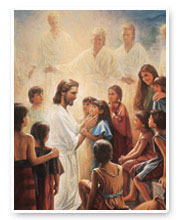 Explain that Jesus Christ blessed the children one by one (see Mark 10:16 and 3 Nephi 1721). Show a picture of Jesus blessing the children. When Jesus blessed the children, he did it with authority from our Heavenly Father. We have the same authority in the Church today, the Melchizedek Priesthood.
 The Ant Bug
 The Sweet Bee
 The white dress was worn by both of my daughters for their blessing. The blue outfit will be worn by our son. It was worn by their father for his blessing.