Teach Your Child to Read

I’m taking a partial maternity leave from this blog as we we recently welcomed a sweet baby boy into our home. Today I am happy to be sharing a guest post from my awesome sister-in-law Becky.

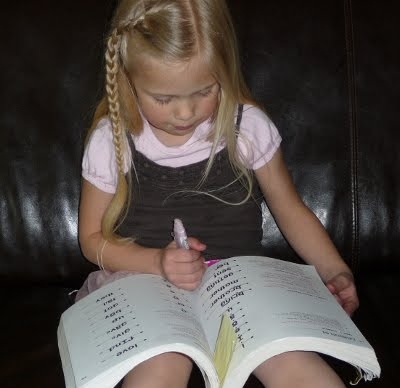
One of the most satisfying things I have done as a mother is to teach my children to read. While many mothering tasks are quickly undone (how many times did I sweep the floor today?!) I see reading as something that will last and bring unmeasurable joy to my children. Here are five simple things I have done to teach my children to love reading.
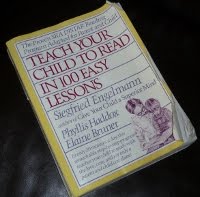
1) Find a good book to help. One of my sisters suggested Teach Your Child to Read as a great book. I have used this book with all my children so far and love the simplicity of the lessons. It breaks down the learning process so that it becomes almost embarrassingly easy. There are many different ways to learn to read, but each theory usually requires a time commitment for the parent teaching the child to read. I try to make our reading lessons a fun time that I spend one on one with the child.
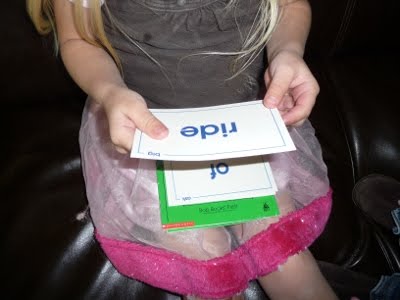
2) Make or buy some “high frequency word” flashcards. Most of my children didn’t become fluent readers until they had mastered many of the high frequency words. It seems like there is a point when reading switches from sounding out words to just reading. For my children, the reading point was usually very close to when they learned many of the high frequency words.
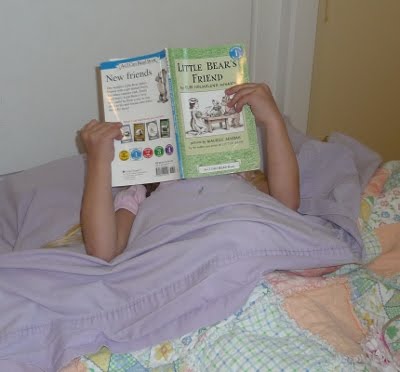
3) Put your children to bed ½ hour early. Putting children in bed early is my tricky way of teaching them to love reading. The children do not know they have an early bedtime- but once in bed they are allowed to read for an extra ½ hour or so. What child would turn down a chance to stay up after bedtime?!
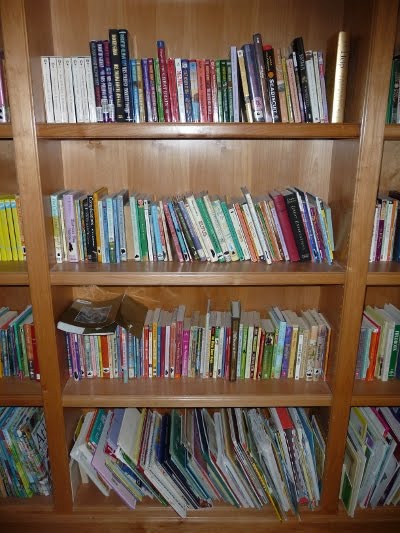
4) Fill your house with good books and magazines. I have found that it is useful to have a good supply of books in your home so that children always have something to read. I love to collect books and have many in my home. However, many people may not care to lug around several hundred books or have space constraints. A visit to the public library is a lovely way to fill your home with books without storage or other problems.

5) Read to your children.
Although a bit overused, I do love this poem:

The Reading Mother
Strickland Gillilan

I had a mother who read to me
Sagas of pirates who scoured the sea.
Cutlasses clenched in their yellow teeth;
“Blackbirds” stowed in the hold beneath.
I had a Mother who read me lays
Of ancient and gallant and golden days;
Stories of Marmion and Ivanhoe,
Which every boy has a right to know.
I had a Mother who read me tales
Of Gelert the hound of the hills of Wales,
True to his trust till his tragic death,
Faithfulness lent with his final breath.
I had a Mother who read me the things
That wholesome life to the boy heart brings-
Stories that stir with an upward touch.
Oh, that each mother of boys were such!
You may have tangible wealth untold;
Caskets of jewels and coffers of gold.
Richer than I you can never be —
I had a Mother who read to me.

Becky is the mother of six “bookend children” (one boy, four girls, one boy). She enjoys living in the shadow of Timpanogos Mountain but still gets homesick for the Arizona desert. When she is not doing damage control, Becky enjoys books, gardening, and running. She can be found (more not than often) at Consider the Lilies.

Pray Earnestly

The Lord directed, “Pray always, and I will pour out my Spirit upon you, and great shall be your blessing.”

Perhaps there has never been a time when we had greater need to pray and to teach our family members to pray. Prayer is a defense against temptation. It is through earnest and heartfelt prayer that we can receive the needed blessings and the support required to make our way in this sometimes difficult and challenging journey we call mortality.

We can teach the importance of prayer to our children and grandchildren both by word and by example. I share with you a lesson in teaching by example as described in a mother’s letter to me relating to prayer. “Dear President Monson: Sometimes I wonder if I make a difference in my children’s lives. Especially as a single mother working two jobs to make ends meet, I sometimes come home to confusion, but I never give up hope.”

Her letter continues as she describes how she and her children were watching general conference, where I was speaking about prayer. Her son made the comment, “Mother, you’ve already taught us that.” She asked, “What do you mean?” Her son replied, “Well, you’ve taught us to pray and showed us how, but the other night I came to your room to ask something and found you on your knees praying to Heavenly Father. If He’s important to you, He’ll be important to me.” The letter concluded, “I guess you never know what kind of influence you’ll be until a child observes you doing yourself what you have tried to teach him to do.”

Thomas S. Monson, “Three Goals to Guide You,” Ensign, Nov 2007, 118–21

Googly Eyes

My children love to use googly eyes in their creative artwork. They add an eye-popping touch (ha ha) to any creature that we are creating. The Sweet Bee often skips the creature creating part and is most content with a bottle of glue and pile of googly eyes.
Shhh…don’t tell, but I always go back later once the glue has dried and pull off the eyes from her artwork and return them to the jar to be used another day. This applies to buttons and beads also. Then we always have plenty of googly eyes on hand!

A 3 Item "To Do" List

I’ve posted before about my “To Do” Lists. Now that we have a new baby in our house, my “To Do” list has needed some adjusting.

Currently I’m operating on the “3 Item To Do List” method (inspired by Simple Mom, of course). Before I go to bed (usually while I’m nursing the previously mentioned sweet baby) I think about the 3 most important things I need to do the next day. 3 things a day is a realistic expectation for myself, with my 3 young children. This week my list included things like: laundry, call about adding the baby to health insurance, do a Nurture Mama blog post, finish the Primary newsletter, get groceries, return library books, etc.

I write down my 3 items and then do my best to focus on those tasks first whenever I have a spare moment throughout the day. I’ve been keeping my list in a prominent place on my fridge so it’s easy to see what I should be working on.

Some days I don’t quite make it through all 3 items. On those days, rather than becoming discouraged, I stop and reflect and remind myself that in reality I did a lot more than 3 things: I did cook dinner for my family, and I did do the dishes, and I did spend 2 hours at the park with my children, and I did read my scriptures, and I did nurse my baby x number of times and change x number of diapers, and I did tell my family that I love them. That’s really what’s most important, isn’t it?

If you need some ideas for organizing yourself and your time a little better, be sure to check out the Home Management Notebook series on Simple Mom. Tsh has fabulous ideas and resources available to help you be more organized and more effective in your home.

FHE: Heavenly Father and Jesus Appeared to Joseph Smith

Scripture of the Week
If any of you lack wisdom, let him ask of God, that giveth to all men liberally, and upbraideth not; and it shall be given him.
James 1:5

Lesson Plan
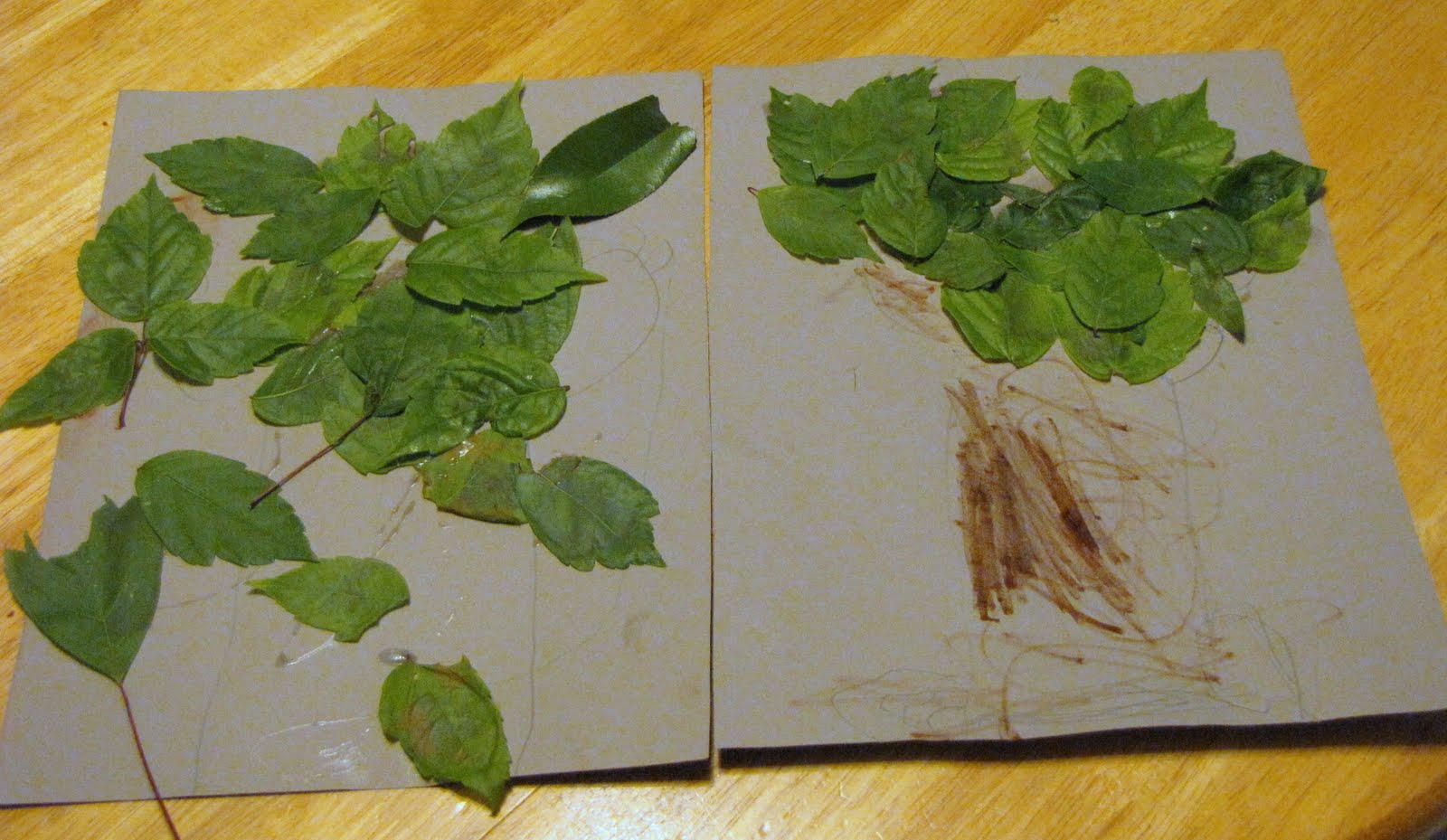
The Ant Bug brought home the CTR Tag-Along Bag from Primary on Sunday, so she selected Lesson 13 from this packet on Sugardoodle.net to teach. She read the story of Joseph Smith going into the grove to pray, and she asked the appropriate questions. For a great hands-on activity we glued leaves to brown paper to make our own sacred grove.

How you conduct yourself has eternal consequences

An eternal bond doesn’t just happen as a result of sealing covenants we make in the temple. How we conduct ourselves in this life will determine what we will be in all the eternities to come. To receive the blessings of the sealing that our Heavenly Father has given to us, we have to keep the commandments and conduct ourselves in such a way that our families will want to live with us in the eternities. The family relationships we have here on this earth are important, but they are much more important for their effect on our families for generations in mortality and throughout all eternity.

By divine commandment, spouses are required to love each other above all others. The Lord clearly declares, “Thou shalt love thy wife with all thy heart, and shalt cleave unto her and none else” (D&C 42:22). The proclamation states: “By divine design, fathers are to preside over their families in love and righteousness and are responsible to provide the necessities of life and protection for their families [see D&C 83:2–4; 1 Tim. 5:8]. [By divine design,] mothers are primarily responsible for the nurture of their children.” By divine design, husband and wife are equal partners in their marriage and parental responsibilities. By direct commandment of God, “parents have a sacred duty … to teach [their children] to love and serve one another, to observe the commandments of God and to be law-abiding citizens [in the countries where they reside]” (Ensign, Nov. 1995, 102; emphasis added; see D&C 68:25–28; Mosiah 4:14–15).

Because of the importance of the family to the eternal plan of happiness, Satan makes a major effort to destroy the sanctity of the family, demean the importance of the role of men and women, encourage moral uncleanliness and violations of the sacred law of chastity, and to discourage parents from placing the bearing and rearing of children as one of their highest priorities.

So fundamental is the family unit to the plan of salvation that God has declared a warning that those “individuals who violate covenants of chastity, who abuse spouse or offspring, or who fail to fulfill family responsibilities will one day stand accountable before God [their maker]. … The disintegration of the family will bring upon individuals, communities, and nations the calamities foretold by ancient and modern prophets” (Ensign, Nov. 1995, 102).

Robert D. Hales, “The Eternal Family,” Ensign, Nov 1996, 64

Mother’s Day Wishes

I’ve been wanting to do something extra special for Mother’s Day on this blog this week, but I haven’t had any brilliant ideas (undoubtedly the result of my sleep-deprived brain). But in reflection, I remembered that this blog itself is a tribute to all mothers. It is meant to encourage and inspire and teach mothers who are deep in the throes of parenthood, in the thrills and the lows and all of the joys.

So as Mother’s Day approaches, my heartfelt wishes go out to all of the mothers who are fulfilling their divine role to nurture their children.

“You have walked the sometimes painful, sometimes joyous path of parenthood. You have walked hand in hand with God in the great process of bringing children into the world that they might experience this estate along the road of immortality and eternal life. It has not been easy rearing a family. Most of you have had to sacrifice and skimp and labor night and day. As I think of you and your circumstances, I think of the words of Anne Campbell, who wrote as she looked upon her children:

You are the trip I did not take;
You are the pearls I cannot buy;
You are my blue Italian lake;
You are my piece of foreign sky.
(“To My Child,” quoted in Charles L. Wallis, ed., The Treasure Chest [1965], 54)

You sisters are the real builders of the nation wherever you live, for you have created homes of strength and peace and security.”

Gordon B. Hinckley, “Women of the Church,” Ensign, Nov 1996, 67

FHE: Courage

Scripture of the Week
“Be strong and of a good courage, fear not, nor be afraid of them: for the Lord thy God, he it is that doth go with thee; he will not fail thee, nor forsake thee.”
Deut. 31:6

Lesson Plan
Discuss the word courage and what it means. Share the stories of Abinidi before King Noah and Daniel in the lion’s den (use GAK photos) and discuss how these men showed great courage and faith in the face of a serious trial.

Study Diligently

A study of the scriptures will help our testimonies and the testimonies of our family members. Our children today are growing up surrounded by voices urging them to abandon that which is right and to pursue, instead, the pleasures of the world. Unless they have a firm foundation in the gospel of Jesus Christ, a testimony of the truth, and a determination to live righteously, they are susceptible to these influences. It is our responsibility to fortify and protect them.

Beyond our study of spiritual matters, secular learning is also essential. Often the future is unknown; therefore, it behooves us to prepare for uncertainties. Statistics reveal that at some time, because of the illness or death of a husband or because of economic necessity, you may find yourself in the role of financial provider. Some of you already occupy that role. I urge you to pursue your education—if you are not already doing so or have not done so—that you might be prepared to provide if circumstances necessitate such. Your talents will expand as you study and learn. You will be able to better assist your families in their learning, and you will have peace of mind in knowing that you have prepared yourself for the eventualities that you may encounter in life

Thomas S. Monson, “Three Goals to Guide You,” Ensign, Nov 2007, 118–21

Gospel Study in April 2010

The Book of Mormon: 1 Nephi through 2 Nephi 7

Ch.7 : The Holy Ghost
Ch. 8: Praying to our Heavenly Father

General Conference Addresses, October 2009

Robert D. Hales, “Seeking to Know God, Our Heavenly Father, and His Son, Jesus Christ,” Ensign, Nov 2009, 29–32

Gaining this knowledge is ultimately the quest of all God’s children on the earth. If you cannot remember believing in God or if you have ceased to believe or if you believe but without real conviction, I invite you to seek a testimony of God now. Do not be afraid of ridicule. The strength and peace that come from knowing God and having the comforting companionship of His Spirit will make your efforts eternally worthwhile.

Even more, with your own testimony of God, you will be able to bless your family, your posterity, your friends, your own life—all those you love. Your personal knowledge of God is not only the greatest gift you will ever give, but it will bring you the greatest joy you will ever have.

Jorge F. Zeballos, “Attempting the Impossible,” Ensign, Nov 2009, 33–34
The Lord does not expect that we do what we cannot achieve. The command to become perfect, as He is, encourages us to achieve the best of ourselves, to discover and develop the talents and attributes with which we are blessed by a loving Eternal Father, who invites us to realize our potential as children of God. He knows us; He knows of our capacities and our limitations. The invitation and challenge to become perfect, to achieve eternal life is for all mankind.

Kent D. Watson, “Being Temperate in All Things,” Ensign, Nov 2009, 38–39

Neil L. Andersen, “‘Repent … That I May Heal You’,” Ensign, Nov 2009, 40–43

M. Russell Ballard, “Fathers and Sons: A Remarkable Relationship,” Ensign, Nov 2009, 47–50
This was an excellent talk, with a messages that can be applied to mothers and daughters as well. I’ll share my notes from this talk in a future post.

Quentin L. Cook, “Stewardship—a Sacred Trust,” Ensign, Nov 2009, 91–94

With respect to our stewardship for our families, some have taught that when we report to the Savior and He asks us to give an account of our earthly responsibilities, two important inquiries will relate to our families. The first will be our relationship with our spouse, and the second will be about each of our children.

It is easy to confuse our priorities. We have a duty to secure the physical safety and well-being of our children. However, some parents place undue priority on temporal and material possessions. Some are far less diligent in their efforts to immerse their children in the gospel of Jesus Christ.Remember that having religious observance in the home is as important as providing food, clothing, and shelter. Parents can also help children discover and develop their talents. We are responsible for the talents we have received. Children who are not taught that they are accountable for their time and talents are increasingly subject to the foolishness and unrighteousness that are so pervasive in the world. The family proclamation warns that individuals “who fail to fulfill family responsibilities will one day stand accountable before God.”

Dieter F. Uchtdorf, “Two Principles for Any Economy,” Ensign, Nov 2009, 55–58

How I admire men, women, and children who know how to work! How the Lord loves the laborer! He said, “In the sweat of thy face shalt thou eat bread,” and “The laborer is worthy of his hire.” He also gave a promise: “Thrust in your sickle with all your soul, and your sins are forgiven you.” Those who are unafraid to roll up their sleeves and lose themselves in the pursuit of worthwhile goals are a blessing to their families, communities, nations, and to the Church.

The Lord doesn’t expect us to work harder than we are able. He doesn’t (nor should we) compare our efforts to those of others. Our Heavenly Father asks only that we do the best we can—that we work according to our full capacity, however great or small that may be.

Work is an antidote for anxiety, an ointment for sorrow, and a doorway to possibility.

Henry B. Eyring, “Be Ready,” Ensign, Nov 2009, 59–62

Many fathers and leaders, when they hear the words of the 121st section of the Doctrine and Covenants, will feel that they must rise higher to come up to that standard. I do. Can you remember a moment when you rebuked a child or youth with sharpness when you were moved by something other than inspiration? Can you remember a time when you told a son to do something or make a sacrifice you were not willing to do or make yourself? Those feelings of regret can spur us to repentance to become more nearly the examples we have covenanted to be.

As we meet our obligations as fathers and leaders, we will help the next generation rise to their glorious future. They will be better than we are, just as you have tried to be even better parents than your parents and better leaders than the great ones who helped you.

Thomas S. Monson, “School Thy Feelings, O My Brother,” Ensign, Nov 2009, 62, 67–69

To be angry is to yield to the influence of Satan. No one can make us angry. It is our choice. If we desire to have a proper spirit with us at all times, we must choose to refrain from becoming angry. I testify that such is possible.

Anger, Satan’s tool, is destructive in so many ways.

The Ensign, April 2010
The Friend, April 2010